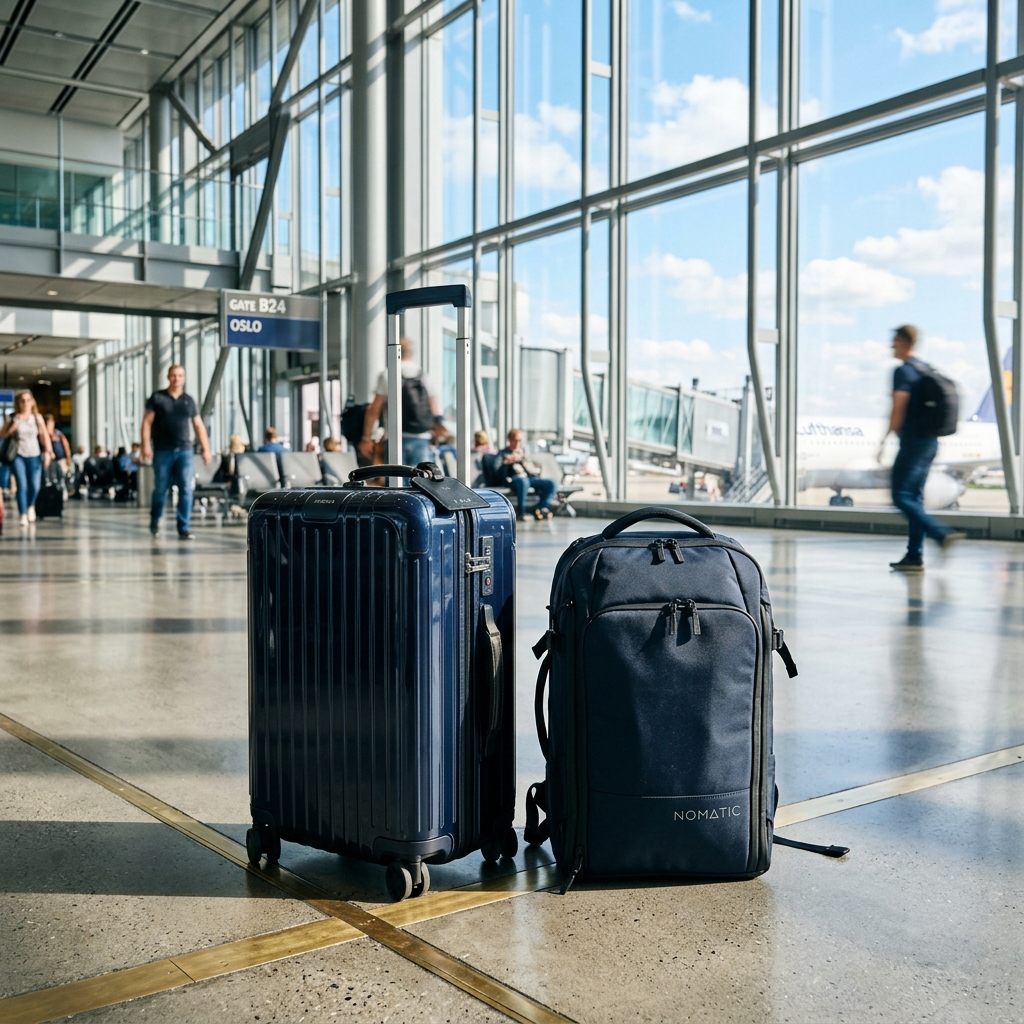
Buying carry-on luggage shouldn’t require a research project, but here we are. Every brand claims theirs is the best. Review sites are compromised by affiliate deals. And the actual question most travelers have — “which bag will fit on my flight, survive three years of travel, and not make packing miserable?” — rarely gets a straight answer.
This page is the ranked-by-type list: rollers vs backpacks, and which bag to buy for which trip shape. The sibling guide, Best Carry-On Luggage for International Travel (2026), is the sizer-and-weight rules piece — IATA footprints, 7 kg caps, and why a US-max bag fails in Frankfurt. For personal-item-only fares, use the underseat carry-on shortlist. If the bag is already chosen and you need the capsule wardrobe, use the carry-on packing list or the train-only Europe method.
Desk listing check: empty weight and packed dimensions on Amazon change when a brand revises a shell. Confirm the current listing against your airline’s sizer; do not buy from memory of a 2024 SKU. Prices below are typical street numbers, not a live quote.
The title on this page says “tested and ranked.” That is a ranking frame, not a private lab. This desk does not run a test fleet. The shortlist below is a research synthesis: manufacturer spec sheets, verified owner reviews, and the airline rules that actually fail a bag at the gate. Treat it as a shortlist to check against your own carrier, not a claim that James Morrow wheeled every shell through four continents.
What to Look For (And What Doesn’t Matter)
What Actually Matters
- Dimensions that fit your airlines. This is non-negotiable. A beautiful bag that doesn’t fit Ryanair’s sizer is useless if you fly Ryanair. Check your most-used airlines’ limits before buying.
- Weight when empty. Every pound your bag weighs is a pound of clothes you can’t pack. This matters most on weight-restricted budget airlines (typically 7–10 kg total including the bag).
- Wheel quality (for rolling bags). Cheap wheels are the first thing to fail. Spinner wheels (4 wheels) roll smoothly in airports but are more fragile than inline wheels (2 wheels).
- Warranty. Good luggage brands offer lifetime or multi-year warranties. Away, Briggs & Riley, and Osprey all stand behind their products — confirm the current terms on the brand site, not the Amazon bullet list.
What Matters Less Than You Think
- USB charging ports. They add weight, drain a battery you still need to pack, and are banned in checked luggage on some airlines. Just carry a power bank.
- Smart features. GPS tracking, fingerprint locks, and weight sensors sound cool but add cost, weight, and failure points. A $3 luggage tag and a TSA-approved lock do the same job.
- Brand prestige. Away bags are genuinely good, but you’re paying a brand premium. Several bags at half the price perform equally well for the same trip shape.
Best Rolling Carry-On Bags
Best Overall: Away The Carry-On — typically around $275
Buying note: Buy the Away if your trip is mostly jet bridges and hotel corridors, and you want a shell that protects souvenirs on the way home. Skip it if you walk cobblestones or climb station stairs every day — that is a backpack trip, covered in the train traveler’s carry-on guide.
The polycarbonate shell and interior compression pad are why this bag keeps showing up in owner reviews: the pad is the feature people actually use, not the brand story. Empty weight is the number to check, not the lifestyle photo. Typical listing copy still advertises about 7.1 lbs; confirm the current SKU, because Away has revised the battery version more than once and some airlines treat a built-in pack as a spare lithium battery.
Dimensions to verify on the listing: about 21.7 x 13.7 x 9 inches. That footprint clears most full-service international bins and fails some European low-cost cages if the expansion zipper is open.
Pros: Build consensus is strong; TSA lock is built in; compression pad is the useful interior feature; warranty is better than a no-name hardshell.
Cons: No exterior pocket for a passport grab. The optional battery is extra weight you do not need. The street price is a brand premium over a Travelpro that does the same airport job.
Best for: One bag for business trips and vacations on full-service carriers.
Listing check: Open the current Amazon page and confirm the model year, empty weight, and whether a battery is included. Do not buy from an old product photo.
Best Value: Travelpro Maxlite 5 Softside Carry-On — typically around $130
Buying note: This is the weight-cap bag. If you fly carriers that put a 7 kg scale at the gate, empty weight is the buying decision, not the colorway. Softside also forgives you by an inch in a tight sizer; a hardshell will not.
Travelpro’s reputation comes from flight-crew use, which is a durability signal, not a lab score from this desk. Typical empty weight on the Maxlite 5 is about 5.4 lbs — nearly two pounds lighter than the Away — which is the entire reason it sits here as value. Exterior pockets matter on a train platform when you need a water bottle without opening the main compartment.
Dimensions to verify: about 21 x 14 x 9 inches.
Pros: Light; owner consensus on the wheels is better than budget hardshells; exterior pockets; price leaves room in the trip budget.
Cons: Soft sides protect less than polycarbonate. Fabric stains. It looks like a working bag, not a lifestyle object.
Best for: Frequent travelers who prioritize weight and function over a hard shell.
Listing check: Travelpro revises Maxlite generations. Confirm “Maxlite 5” (or the current successor) and the packed dimensions including wheels.
Best Budget: Amazon Basics 21-Inch Hardside Spinner — typically around $65
Buying note: Buy this if you take a few trips a year and would rather spend the luggage money on the ticket. Do not buy it if you need the bag to survive daily crew-style abuse or a 7 kg allowance with a heavy shell.
The useful fact in the listing is the price-to-shell trade: you get a spinner and a divider, and you give up zipper and wheel life. Typical empty weight around 6.4 lbs is acceptable on US majors and tight on Asian carriers that weigh the bag.
Pros: Cheap enough that a gate-check scrape is annoying, not a crisis. Hard shell. Light enough for occasional use.
Cons: Wheels and zippers will not match Travelpro or Away. No exterior pocket. Warranty is shorter.
Best for: Occasional travelers, or anyone who would rather fund the trip than the bag.
Listing check: Amazon Basics SKUs get swapped. Confirm 21-inch carry-on dimensions and empty weight on the page you are about to buy, not a marketplace collage.
Best Travel Backpacks (Carry-On Size)
Best Overall: Osprey Farpoint 40 — typically around $165
Buying note: This is the bag for the itinerary this site actually writes — Europe by train, station stairs, and cobblestones. A spinner is misery on that trip. The Farpoint (Fairview in the women’s fit) is the long-standing 40 L reference point, not because this desk lab-tested it, but because owner reviews and Osprey’s own spec sheet keep lining up with airline carry-on cages.
It opens like a suitcase, the harness stows for a bin or a rack, and the All Mighty Guarantee is the warranty owners cite when a zipper fails. At 40 L it is the maximum volume that still pretends to be a cabin bag. On Ryanair-style cages it is a maybe — measure before you fly.
Dimensions to verify: about 21.7 x 13.8 x 9.4 inches. That cuts it close on strict airlines.
Pros: Carry comfort on long walks; clamshell opening; lockable zippers; stowable straps. Osprey’s guarantee covers damage.
Cons: May be gate-checked on strict budget airlines. No separate laptop sleeve on every version — use packing cubes. Hip belt is light for a heavy load.
Best for: Multi-city travelers and anyone carrying the bag on stairs or public transit.
Listing check: Farpoint 40 and Fairview 40 are different fits, not different volumes. Confirm liters, packed dimensions, and whether a daypack is included on the current listing.
Best for Strict Airlines: Patagonia Black Hole MLC 45L — typically around $199
Buying note: The 45 L name is a listing trap. Patagonia’s MLC (Maximum Legal Carry-On) is supposed to hit cabin dimensions by shape, not by stuffing 45 liters into a US-max cube. Confirm packed dimensions on the current page before you trust the name.
The useful feature is the three carry modes — backpack, shoulder bag, briefcase — for mixed days when you leave a hotel on foot and board a train later. The fabric is the durability argument. The weight is the downside versus the Farpoint.
Pros: Convertible carry; tough recycled fabric; designed around a legal cabin footprint rather than a hiking volume.
Cons: Heavier than the Osprey in typical spec sheets (about 3 lbs vs 2.4 lbs). Less internal organization. No real hip belt for long carries.
Listing check: “45L” and “carry-on legal” both appear in titles. Measure the bag you would receive, including any external pockets.
Best Daypack Size: Osprey Daylite Expandable Travel Pack 26+6L — typically around $110
Buying note: This is the personal-item bag, not a two-week suitcase. Compressed at 26 L it is the one that still fits Ryanair’s free item on a basic fare. The +6 L zipper is for the trip home or a more generous carrier — leave it closed outbound if the sizer is the point.
If you need a rolling personal item instead, that shortlist lives on the underseat carry-on page.
Pros: Light; fits strict budget personal-item rules when compressed; useful as a daypack at the destination.
Cons: 26 L is tight past three or four days of clothing. No hip belt. Only works if you actually pack like a minimalist.
Listing check: Confirm compressed vs expanded dimensions. The expanded depth will fail a personal-item sizer even if the compressed bag passes.
How to Choose: Decision Framework
Frequent flyer on full-service airlines → Away Carry-On or Travelpro Maxlite 5. Rolling bags excel in airports with smooth floors and elevator access to hotel rooms.
Multi-destination backpacker → Osprey Farpoint 40. Wheels are useless on cobblestones, train platforms, and hostel stairs. A good backpack is the answer. Pair it with the train travel packing list if the itinerary is rail-heavy.
Budget airline warrior → Travelpro Maxlite 5 (lightest roller) or Osprey Daylite Expandable (lightest backpack). Weight limits are the constraint, so empty weight is the deciding factor.
Occasional traveler on a budget → Amazon Basics Hardside Spinner. It’ll last a dozen trips, and at a typical $65 you won’t worry about gate-checking it.
For a complete packing strategy to go with your new bag, the carry-on packing list for international travel covers exactly what to put inside it.
Airline Size Limits: Quick Reference (2026)
| Airline Category | Typical Size Limit | Weight Limit | Notes |
|---|---|---|---|
| US Legacy (Delta, United, AA) | 22 x 14 x 9 in | No weight limit | Generous enforcement |
| European Legacy (BA, Lufthansa, AF) | 55 x 40 x 23 cm | 8-12 kg | Moderate enforcement |
| European Budget (Ryanair, easyJet) | 55 x 40 x 20 cm (paid) | 10 kg | Strict enforcement |
| Asian Legacy (ANA, Singapore, Cathay) | 55 x 40 x 25 cm | 7-10 kg | Strict weight enforcement |
| Asian Budget (AirAsia, Cebu Pacific) | 56 x 36 x 23 cm | 7 kg | Very strict enforcement |
The universal rule: If your bag fits in a standard overhead bin without forcing, no airline will reject it. The bags on this list all meet that standard for full-service carriers. Budget airline compliance varies — check your specific carrier. Rules change; the carrier’s current baggage page beats this table.
Affiliate links on this page use the Amazon Associates tag artoftravel06-20. See how we make money and the editorial policy.